

Precision Steroid Therapy
The only 0.25 mg dexamethasone tablet on the market designed to support smaller dose increments enabling accurate administration without reliance on tablet splitting or dose manipulation.
Learn MoreRx Available by prescription only
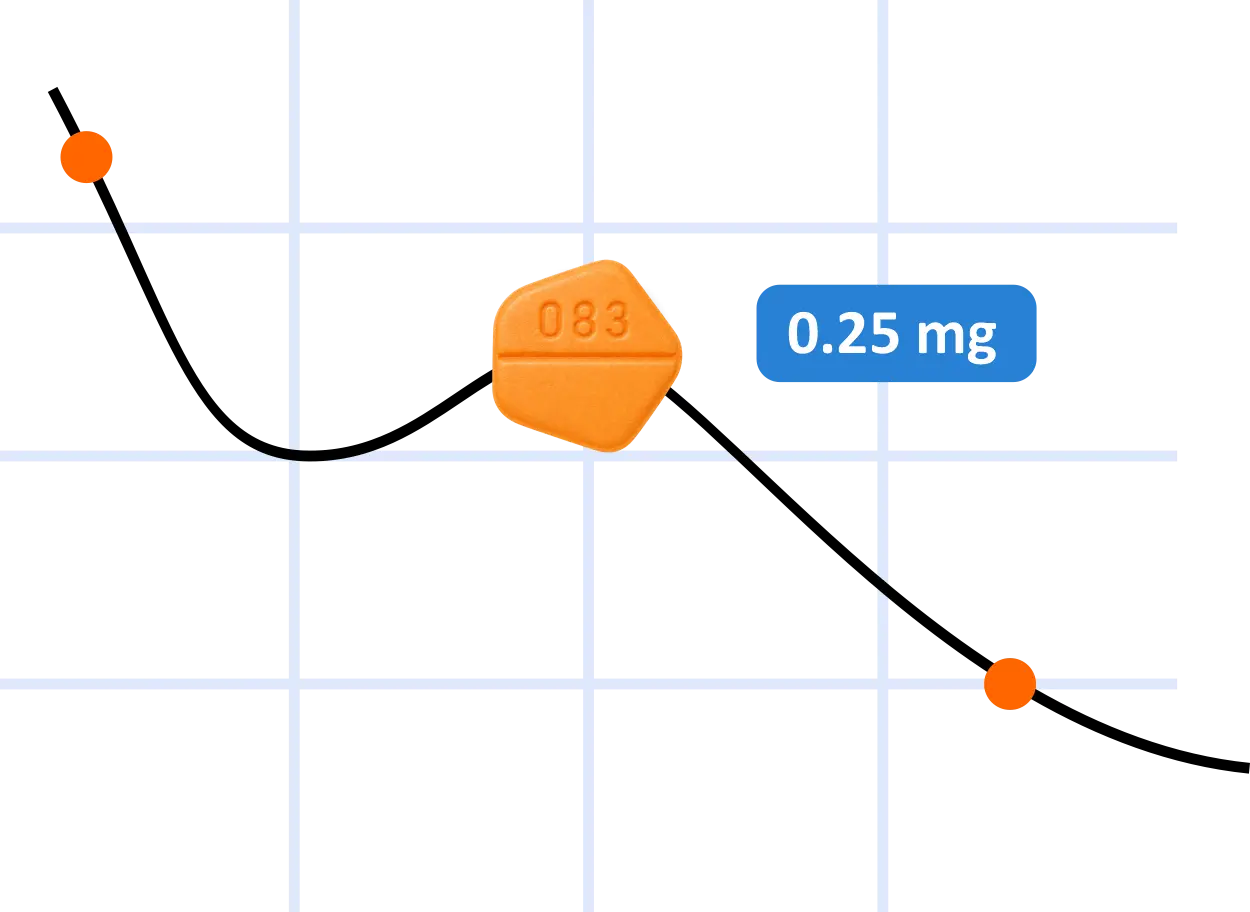
0.25 mg Precision Dosing
Dexamethasone is a high-potency corticosteroid where small dosing adjustments may be clinically meaningful. A dedicated 0.25 mg tablet strength allows precise dosing without tablet splitting or manipulation.

Avoid Tablet Splitting
Ready-to-prescribe low-dose strength without tablet manipulation.

Tapering Flexibility
Supports gradual dose reductions during corticosteroid tapering regimens.

Clinical Control
Supports titration when small changes can be clinically meaningful.
Sensitive Populations
Specifically designed for patient populations requiring careful dose adjustments

Pediatric Patients
Children often require individualized corticosteroid dosing based on age, weight, and clinical response. Our 0.25 mg tablet strength supports precise dose adjustments without the need for tablet splitting.
Per prescribing information: pediatric patients should be titrated to the lowest effective dose.
The Elderly
Older adults may be more susceptible to corticosteroid-related adverse effects. Smaller dose increments can support careful titration when clinically appropriate.
Per prescribing information: dose selection for an elderly patient should be cautious, usually starting at the low end of the dosing range.
Dose Sensitive Individuals
For patients requiring fine dose adjustments, a dedicated 0.25 mg strength provides greater dosing flexibility and supports gradual titration or tapering regimens.
Per prescribing information: the lowest possible dose of corticosteroids should be used to control the condition under treatment.
Potency Comparison
Dexamethasone is a high-potency corticosteroid, meaning small doses may produce significant anti-inflammatory effects. Approximate oral equivalency*:
Corticosteroid | Equivalent Dose |
| HYDROCORTISONE | 20 mg |
| PREDNISONE/SOLONE | 5 mg |
| METHYLPREDNISOLONE | 4 mg |
| TRIAMCINOLONE | 4 mg |
| DEXAMETHASONE | 0.75 mg |
*Dose equivalencies shown are for oral administration only. Equivalent doses may vary for other routes of administration. Consult your healthcare provider for dosing guidance specific to your treatment.
Eliminate Tablet Splitting
Patients frequently have difficulty splitting small tablets, particularly: elderly patients, visually impaired patients, and patients with limited dexterity. Providing the correct dose in a single tablet can simplify counseling and improve medication use.
Lower dexamethasone doses are often achieved by splitting higher-strength tablets, yet tablet splitting may introduce:
Inconsistent dose portions
Dispensing complexity
Additional pharmacy workflow steps
A 0.25 mg tablet provides a ready-to-dispense low-dose option, eliminating the need for manipulation. Using a tablet designed for the prescribed dose can help reduce variability associated with split tablets. This supports more consistent dispensing and patient administration.


Micronized Dexamethasone
Our formulation features micronized dexamethasone, in which the active ingredient is processed into exceptionally fine particles. This advanced micronization process promotes more uniform blending throughout the formulation and supports consistent dosing and improved dispersion compared with conventional particle sizes. By utilizing micronized pharmaceutical ingredients, we are committed to delivering a high-quality, precision-formulated product manufactured to rigorous standards.
Prescribing Dexlyt™
Dexlyt™ is easy to prescribe and provides considerable patient savings to eligible commercially insured patients
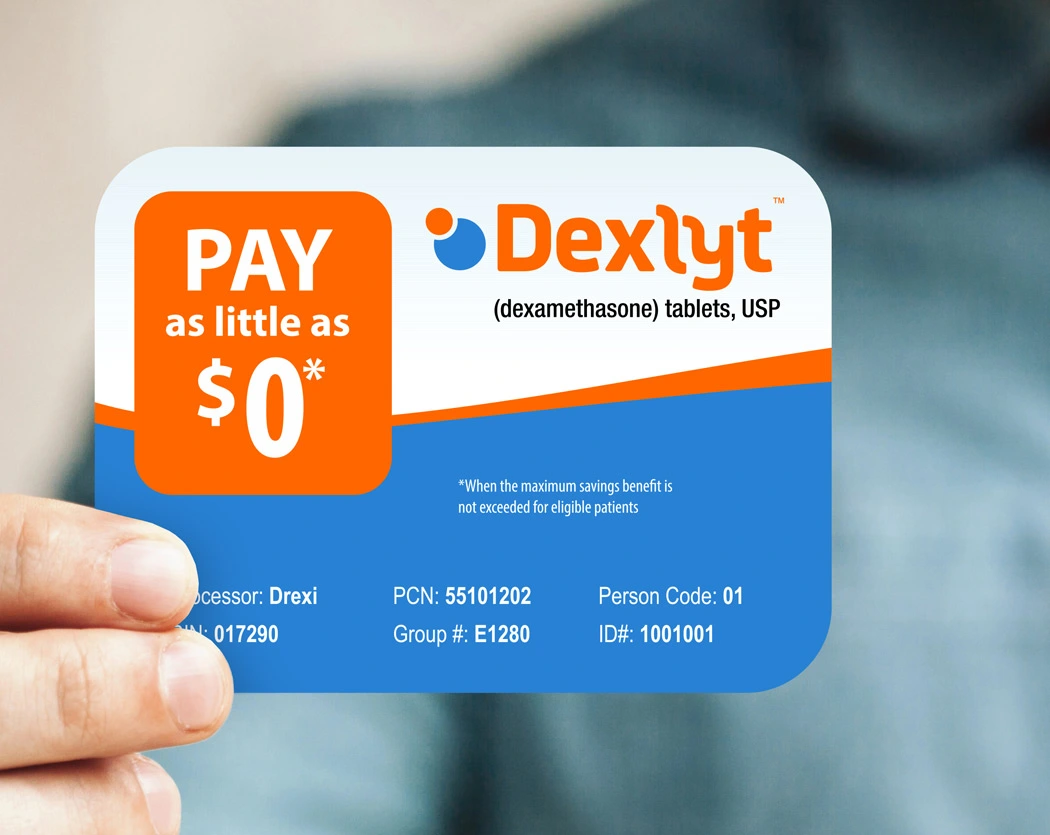
Patients may pay as little as $0* for Dexlyt™
The Dexlyt™ Savings Program offers most eligible commercially insured patients $0* out of pocket cost on a monthly supply of Dexlyt™.
No patient registration is required to use the card
The savings card can be applied to initial prescriptions, refills, and 30 or 90-day prescription supply
* When the maximum savings benefit is not exceeded for eligible patients
Indications & Usage
Dexlyt™ is a glucocorticoid that modifies the body's immune responses to diverse stimuli, used for the treatment of:
- Allergic states: Control of severe or incapacitating allergic conditions intractable to adequate trials of conventional treatment in asthma, atopic dermatitis, contact dermatitis, drug hypersensitivity reactions, perennial or seasonal allergic rhinitis, and serum sickness.
- Dermatologic diseases: Bullous dermatitis herpetiformis, exfoliative erythroderma, mycosis fungoides, pemphigus, and severe erythema multiforme (Stevens-Johnson syndrome).
- Endocrine disorders: Primary or secondary adrenocortical insufficiency (hydrocortisone or cortisone is the drug of choice; may be used in conjunction with synthetic mineralocorticoid analogs where applicable; in infancy mineralocorticoid supplementation is of particular importance), congenital adrenal hyperplasia, hypercalcemia associated with cancer, and nonsuppurative thyroiditis.
- Gastrointestinal diseases: To tide the patient over a critical period of the disease in regional enteritis and ulcerative colitis.
- Hematologic disorders: Acquired (autoimmune) hemolytic anemia, congenital (erythroid) hypoplastic anemia (Diamond-Blackfan anemia), idiopathic thrombocytopenic purpura in adults, pure red cell aplasia, and selected cases of secondary thrombocytopenia.
- Miscellaneous: Diagnostic testing of adrenocortical hyperfunction, trichinosis with neurologic or myocardial involvement, tuberculous meningitis with subarachnoid block or impending block when used with appropriate antituberculous chemotherapy.
- Neoplastic diseases: For the palliative management of leukemias and lymphomas.
- Nervous system: Acute exacerbations of multiple sclerosis, cerebral edema associated with primary or metastatic brain tumor, craniotomy, or head injury.
- Ophthalmic diseases: Sympathetic ophthalmia, temporal arteritis, uveitis, and ocular inflammatory conditions unresponsive to topical corticosteroids.
- Renal diseases: To induce a diuresis or remission of proteinuria in idiopathic nephrotic syndrome or that due to lupus erythematosus.
- Respiratory diseases: Berylliosis, fulminating or disseminated pulmonary tuberculosis when used concurrently with appropriate antituberculous chemotherapy, idiopathic eosinophilic pneumonias, symptomatic sarcoidosis.
- Rheumatic disorders: As adjunctive therapy for short-term administration (to tide the patient over an acute episode or exacerbation) in acute gouty arthritis, acute rheumatic carditis, ankylosing spondylitis, psoriatic arthritis, rheumatoid arthritis, including juvenile rheumatoid arthritis (selected cases may require low-dose maintenance therapy). For the treatment of dermatomyositis, polymyositis, and systemic lupus erythematosus.
Please see Full Prescribing Information, including Boxed Warning, and Important Safety Information on the product itself and/or on www.dexlyt.com.
Individual patient results may vary. To report suspected adverse reactions, contact the FDA at 1-800-FDA-1088 or www.fda.gov/medwatch. You may also contact Pangea Pharmaceuticals at 855-892-8224 or drugsafety@pangeapharm.com.
How Supplied
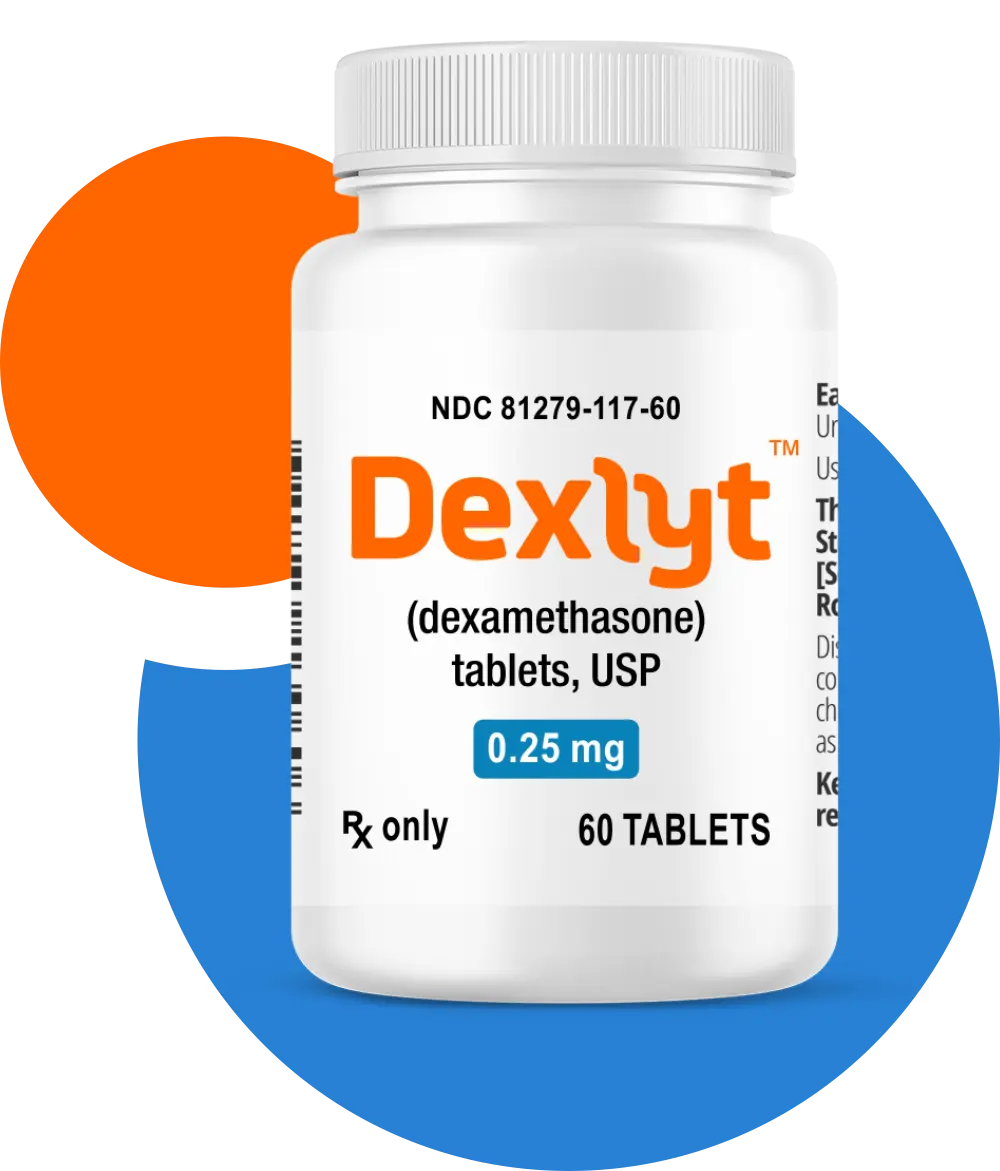
Dexlyt™ are available as 0.25 mg tablets (scored) and supplied bottles of 60 (NDC 81279-117-60).
Contraindications
Dexlyt™ is contraindicated in patients who are hypersensitive to any components of this product. Systemic fungal infections.
Warnings & Precautions
Rare instances of anaphylactoid reactions have occurred in patients receiving corticosteroid therapy.
Increased dosage of rapidly acting corticosteroids is indicated in patients on corticosteroid therapy subjected to any unusual stress before, during, and after the stressful situation.
Corticosteroids, including Dexlyt™, suppress the immune system and increase the risk of infection with any pathogen, including viral, bacterial, fungal, protozoan, or helminthic pathogens. Corticosteroids can:
- Reduce resistance to new infections
- Exacerbate existing infections
- Increase the risk of disseminated infections
- Increase the risk of reactivation or exacerbation of latent infections
- Mask some signs of infection
Corticosteroid-associated infections can be mild but can be severe and at times fatal. The rate of infectious complications increases with increasing corticosteroid dosages.
Monitor for the development of infection and consider Dexamethasone Tablets withdrawal or dosage reduction as needed.
For full Warnings and Precautions please refer to product Prescribing Information.
Adverse Reactions
The following adverse reactions have been reported with Dexamethasone or other corticosteroids:
Allergic reactions: Anaphylactoid reaction, anaphylaxis, angioedema.
Cardiovascular: Bradycardia, cardiac arrest, cardiac arrhythmias, cardiac enlargement, circulatory collapse, congestive heart failure, fat embolism, hypertension, hypertrophic cardiomyopathy in premature infants, myocardial rupture following recent myocardial infarction, edema, pulmonary edema, syncope, tachycardia, thromboembolism, thrombophlebitis, vasculitis.
Dermatologic: Acne, allergic dermatitis, dry scaly skin, ecchymoses and petechiae, erythema, impaired wound healing, increased sweating, rash, striae, suppression of reactions to skin tests, thin fragile skin, thinning scalp hair, urticaria.
Endocrine: Decreased carbohydrate and glucose tolerance, development of cushingoid state, hyperglycemia, glycosuria, hirsutism, hypertrichosis, increased requirements for insulin or oral hypoglycemic agents in diabetes, manifestations of latent diabetes mellitus, menstrual irregularities, secondary adrenocortical and pituitary unresponsiveness (particularly in times of stress, as in trauma, surgery, or illness), suppression of growth in pediatric patients.
Fluid and electrolyte disturbances: Congestive heart failure in susceptible patients, fluid retention, hypokalemic alkalosis, potassium loss, sodium retention, tumor lysis syndrome.
Gastrointestinal: Abdominal distention, elevation in serum liver enzyme levels (usually reversible upon discontinuation), hepatomegaly, increased appetite, nausea, pancreatitis, peptic ulcer with possible perforation and hemorrhage, perforation of the small and large intestine (particularly in patients with inflammatory bowel disease), ulcerative esophagitis.
Metabolic: Negative nitrogen balance due to protein catabolism.
Musculoskeletal: Aseptic necrosis of femoral and humeral heads, loss of muscle mass, muscle weakness, osteoporosis, pathologic fracture of long bones, steroid myopathy, tendon rupture, vertebral compression fractures.
Neurological/Psychiatric: Convulsions, depression, emotional instability, euphoria, headache, increased intracranial pressure with papilledema (pseudotumor cerebri) usually following discontinuation of treatment, insomnia, mood swings, neuritis, neuropathy, paresthesia, personality changes, psychic disorders, vertigo.
Ophthalmic: Exophthalmos, glaucoma, increased intraocular pressure, posterior subcapsular cataracts, vision blurred.
Other: Abnormal fat deposits, decreased resistance to infection, hiccups, increased or decreased motility and number of spermatozoa, malaise, moon face, weight gain.
For complete prescribing and dosage information click here